 Acceso sin colas disponible
 Queluz vs Versalles: La Respuesta Rococó de Portugal al Original Francés
Una comparativa exclusiva entre el Palácio Nacional de Queluz y el Château de Versailles — escalas distintas, ambiciones diferentes y cómo es realmente la visita a cada uno.
Durante dos siglos, Queluz ha sido conocido como el Versalles portugués, y la comparación es deliberadamente buscada. La corte de los Braganza que lo construyó a partir de 1747 se medía activamente con el vocabulario rococó francés que Luis XV había perfeccionado en Versalles: largas fachadas en tonos pastel, salones de espejos dorados, jardines formales con setos de boj, canales axiales y estatuaria mitológica en plomo. Pero es también en la comparación donde la mayoría de visitantes primerizos recalibran sus expectativas, porque ambos palacios difieren en escala, atmósfera y experiencia de visita en un orden de magnitud aproximado. Versalles recibe alrededor de diez millones de visitantes al año y está diseñado para absorberlos; Queluz recibe menos de trescientos mil y fue concebido para el ocio cortesano íntimo. Esta guía compara ambos con honestidad — orígenes, arquitectura, jardines, afluencia y accesibilidad — para que usted pueda decidir si la etiqueta de Versalles portugués le dice realmente lo que necesita saber.
Dos Cortes, Dos Ambiciones
Versailles fue la sede del gobierno real francés durante más de un siglo, transformado desde el pabellón de caza de Luis XIII por Luis XIV hasta convertirse en el escenario principal del absolutismo europeo. Cuando Luis XV redecoró secciones significativas en estilo rococó a partir de la década de 1730, Versailles ya albergaba la corte francesa, los ministerios y una pequeña ciudad de servidores. La arquitectura existe para proyectar el poder del Estado hacia el exterior; la escala existe para absorber todo el aparato administrativo de una monarquía continental.
Queluz existe por la razón opuesta. El Príncipe Pedro —hermano menor del Rey José I, sin expectativas de heredar el trono portugués— encargó una residencia de verano privada en el emplazamiento de un antiguo pabellón de caza real en 1747. El encargo fue para el ocio, no para el gobierno: una casa de campo para que la familia Bragança escapara del calor y la ceremonia de Lisboa. Cuando Pedro se convirtió posteriormente en rey consorte a través de su matrimonio con la Reina María I en 1777, Queluz asumió algunas funciones de residencia real, pero nunca se convirtió en la sede del gobierno portugués. La escala más reducida, la silueta más baja, los interiores más íntimos y los jardines transitables reflejan desde el inicio una ambición diferente: un idilio rococó de los Bragança en lugar de un escenario de Estado de los Borbones.
Arquitectura y Materiales Comparados
Versailles está construido en piedra caliza pálida con órdenes clásicos monumentales y un eje central majestuoso dominado por la Galería de los Espejos. Su escala es descomunal: la fachada principal se extiende por más de seiscientos metros, los jardines abarcan casi novecientas hectáreas y el Gran Canal por sí solo mide un kilómetro y medio de longitud. Los interiores rebosan de mármol, bronce y suelos de marquetería, estratificados a lo largo de generaciones de monarcas franceses desde Luis XIV en adelante. El efecto global es jerárquico e imperial; todo refuerza la posición del soberano en el centro de una maquinaria enorme.
Queluz está construido con revoque y yeso pintado sobre una estructura de mampostería mucho más ligera, revestida en el suave color rosa pálido que define su imagen pública hoy. La fachada principal mide bastante menos de doscientos metros, los jardines cubren unas pocas hectáreas en lugar de centenares, y el largo canal axial de azulejos es tan estrecho que puede cruzarse de un salto. En el interior, los materiales son madera tallada y dorada, techos pintados, paneles de espejo y yeso pintado en tonos pastel en lugar de mármol. La Sala del Trono es brillante pero compacta; la Sala de los Embajadores es íntima; la Sala de Música alberga instrumentos originales del siglo XVIII a escala humana. Donde Versailles abruma, Queluz invita: ambos edificios son primos reconocibles en estilo pero experiencias profundamente diferentes al recorrerlos.
Jardines: Los Setos de Boj de Robillion y el Canal de Azulejos
Ambos palacios emplean el mismo vocabulario formal del rococó francés en sus jardines: parterres de boj recortado, canales axiales, estatuaria mitológica de plomo y composiciones geométricas visibles desde las ventanas principales de los interiores. Versailles, diseñado bajo André Le Nôtre desde la década de 1660 y progresivamente ampliado, despliega este vocabulario a lo largo de novecientas hectáreas con el Gran Canal como eje central, múltiples bosquetes, los palacios de Trianon y una granja en funcionamiento en el Hameau de la Reine. El jardín está concebido para experimentarse durante horas, en parte a pie y en parte en Petit Train.
Queluz emplea el mismo vocabulario a una décima parte de la escala. Los jardines fueron trazados bajo Jean-Baptiste Robillion en el siglo XVIII, con estatuaria mitológica de plomo fundida en el taller del escultor británico John Cheere: figuras de Tritón, Neptuno, Baco y las estaciones dispuestas a lo largo de los ejes del parterre. El canal de azulejos axial transportaba en su día fiestas en barca para la corte, estrecho y flanqueado por paneles de azulejo pintados a mano que perviven en muchos tramos hoy. El jardín formal completo puede recorrerse adecuadamente en treinta a cuarenta y cinco minutos. Lo que Queluz pierde en monumentalidad lo gana en escala humana: las estatuas de plomo están a la altura de la mano, los setos de boj son transitables en lugar de contemplables, y el canal está a distancia de conversación en lugar de distancia de carruaje. Para muchos visitantes que han conocido ambos, el jardín de Queluz resulta el paseo real más gratificante.
Afluencia, Entradas y Experiencia de Visita
Versalles es uno de los sitios patrimoniales más visitados de Europa, con alrededor de diez millones de visitantes al año, y la experiencia de visita refleja ese volumen. Las entradas con horario de acceso reservado se aplican estrictamente, la Galería de los Espejos avanza como una corriente lenta de cuerpos durante las horas punta del verano, y los jardines absorben mejor la multitud que el edificio. Reservar con semanas de antelación en verano es lo habitual; llegar sin entrada en un día de máxima afluencia supone el riesgo de no poder entrar en absoluto.
Queluz recibe menos de trescientos mil visitantes al año y la experiencia es, en consecuencia, más tranquila. El palacio no aplica estrictos turnos de entrada con horario reservado de treinta minutos como hace el Palacio de Pena; se compra una entrada para una fecha y se entra al llegar. Las colas en hora punta en la puerta principal pueden llegar a los treinta minutos entre las once y la una, aproximadamente, en julio y agosto, cuando llega el tráfico de autocares de un día desde Lisboa, pero el interior rara vez se siente saturado y los visitantes a menudo encuentran salas completamente para ellos fuera de la franja de media mañana. Las entradas con acceso prioritario y servicio de conserjería evitan la cola de la puerta y permiten entrar directamente. El contraste en la experiencia de visita es la parte más llamativa de la comparación: en Versalles se avanza en una corriente; en Queluz se camina casi en soledad.
¿Cuál debería elegir?
Ambos palacios no son realmente competidores —se encuentran en países distintos, en itinerarios diferentes— pero los visitantes que han estado en Versalles preguntan a menudo si Queluz justifica el desvío. La respuesta honesta depende de qué valoró usted en Versalles. Si fue por la escala monumental, el espectáculo arquitectónico de Estado, la Galería de los Espejos como telón de fondo célebre y los jardines a pie o en Petit Train, entonces Queluz le resultará pequeño y diferente más que equivalente. Si fue por el trabajo artesanal rococó de los interiores —la talla dorada, los salones con espejos, los techos pintados, la cultura de las salas de música, el jardín formal de setos recortados con estatuaria a escala humana— entonces Queluz ofrece el mismo vocabulario en un formato más íntimo, con salas en las que puede permanecer a solas y un jardín que puede recorrer adecuadamente en menos de una hora.
Para quienes planean un viaje a Lisboa y Sintra, Queluz cobra más sentido como complemento de medio día que como atracción principal. Se combina naturalmente con Pena Palace o Sintra National Palace el mismo día, está en la misma línea de tren de CP, y aporta esa dimensión cortesana rococó que los palacios en las alturas de Sintra no ofrecen. Para habituales de Versalles que deseen un referente del rococó portugués, Queluz es la elección obvia en este corredor —no hay segundo candidato—. Para visitantes primerizos en Lisboa que deban elegir entre Queluz y un palacio en las colinas de Sintra como prioridad de un solo día, Pena suele imponerse por su exterior espectacular, mientras que Queluz gana en serenidad interior. La mayoría de los visitantes descubre que hacer ambos, en la misma línea de tren de ida y vuelta, es la respuesta correcta.
Preguntas frecuentes
¿Es Queluz realmente comparable a Versalles?
Estilísticamente sí: ambos despliegan el mismo vocabulario cortesano rococó europeo de mediados del siglo XVIII en interiores y jardines. En escala, no: Versalles es aproximadamente diez veces mayor en tamaño y en número de visitantes. Queluz es la experiencia rococó íntima; Versalles es la monumental.
¿Cuál es más antiguo, Queluz o Versalles?
Versalles es más antiguo como residencia real. El pabellón de caza de Luis XIII data de la década de 1620 y la gran ampliación de Luis XIV de la década de 1660. La construcción de Queluz comenzó en 1747 sobre el emplazamiento de un antiguo pabellón de caza real, y el carácter rococó definitivo se completó bajo el reinado de la reina María I en la década de 1780.
¿Tiene Queluz una Galería de los Espejos?
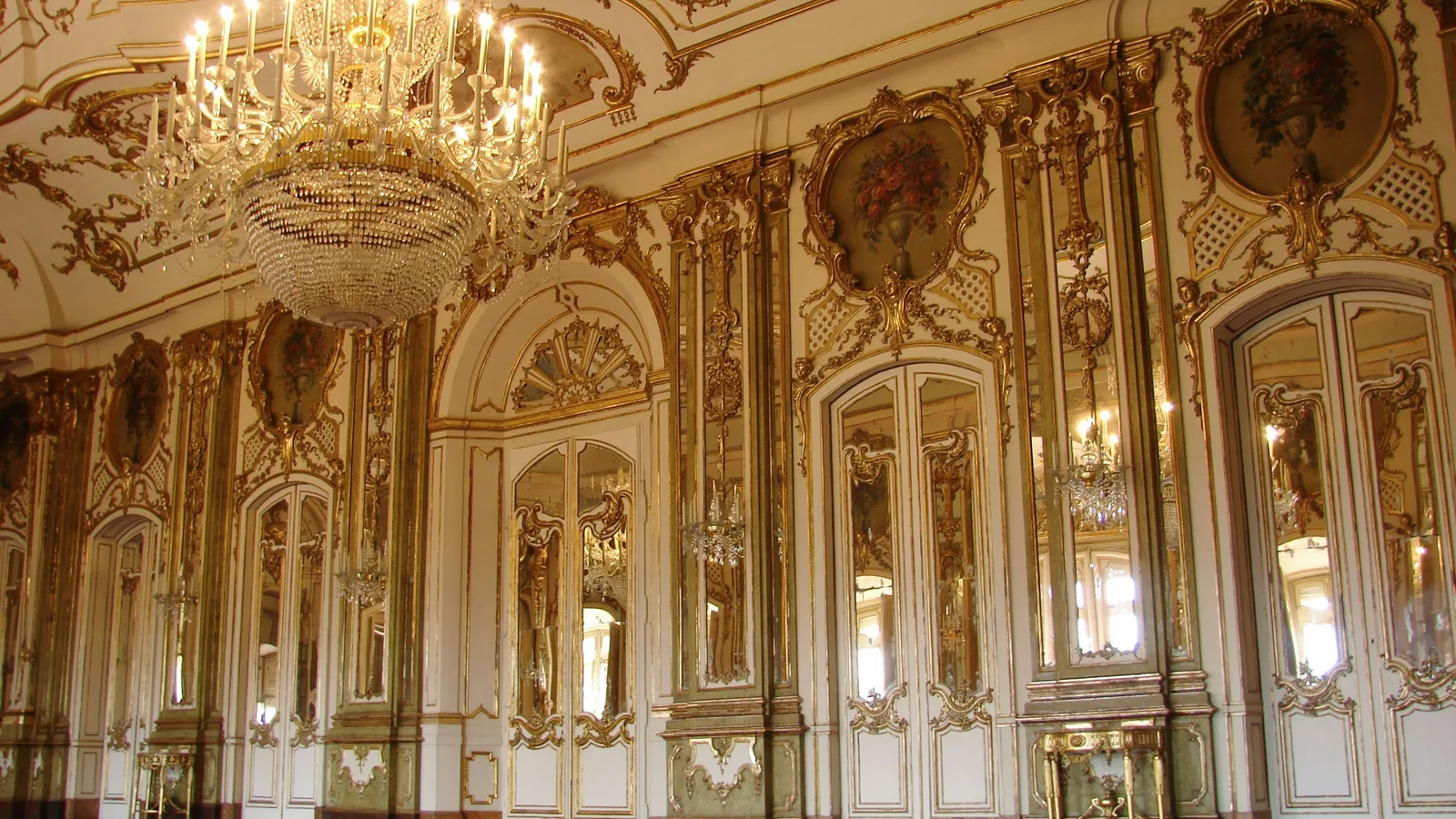
No en el sentido literal de Versalles, pero la Sala do Trono desempeña un papel comparable: una larga galería rococó en blanco y oro, con paredes espejadas que reflejan arañas de cristal tallado y un techo pintado que celebra la dinastía Bragança. Es el interior estrella del palacio para las fotografías.
¿Merecen la pena los jardines de Queluz?
Sin duda: representan aproximadamente la mitad del encanto del palacio y no deben omitirse. Los parterres formales, la estatuaria mitológica en plomo procedente del taller de John Cheere y el largo canal axial revestido de azulejos pueden recorrerse en treinta o cuarenta y cinco minutos a ritmo tranquilo.
¿Es Queluz más fácil de visitar que Versalles?
De forma significativa. Sin estrictos turnos de entrada con horario reservado, sin presión de reserva anticipada fuera de los fines de semana de máxima afluencia en verano, sin la logística del Petit Train y con un interior tranquilo durante la mayor parte del año. Las entradas con acceso prioritario y servicio de conserjería evitan la cola de la puerta que sí se forma a media mañana en julio y agosto.
¿Quién diseñó Queluz?
El arquitecto portugués Mateus Vicente de Oliveira trazó los planos originales de 1747 y dotó al palacio de su característica silueta baja color rosa. El arquitecto francés Jean-Baptiste Robillion asumió los interiores principales y los jardines a partir de la década de 1750 y es el responsable de la Sala del Trono, los jardines y el canal de azulejos.
¿Copió Queluz directamente a Versalles?
No: los arquitectos trabajaron dentro del mismo lenguaje rococó europeo sin copiar ningún edificio concreto. Los visitantes familiarizados con Versalles, Sanssouci o Caserta reconocerán el vocabulario sin encontrar citas literales de ninguno de ellos. Queluz adaptó ese lenguaje a una corte Bragança más reducida y menos jerárquica.
¿Es el espectáculo ecuestre comparable a algo en Versalles?
La Escuela Portuguesa de Arte Ecuestre ofrece doma clásica con música barroca y libreas del siglo XVIII en el Picadeiro Henrique Calado, dentro del recinto del palacio. El equivalente francés más próximo es la Académie du Spectacle Équestre de Versalles, aunque la escuela portuguesa posee un linaje más antiguo y está reconocida por la UNESCO como Patrimonio Cultural Inmaterial.
¿Cómo se comparan los precios de las entradas?
Ambos palacios mantienen tarifas razonables como monumentos estatales, aunque los precios exactos varían cada año. La diferencia práctica más significativa radica en el coste total de la visita: Versalles requiere realmente un día completo más el desplazamiento desde París, mientras que Queluz se adapta perfectamente a una relajada media jornada desde Lisboa, siendo además el trayecto en tren muy económico.
¿Puedo visitar Queluz de camino a Sintra?
Sí, la estación de Queluz-Belas se encuentra en la misma línea CP de Sintra, por lo que el itinerario habitual consiste en dedicar la mañana a Queluz y continuar después en tren hasta Sintra por la tarde. La ubicación geográfica convierte a Queluz en un complemento natural de una jornada Lisboa-Sintra, más que en un destino independiente.