 Acceso sin colas disponible
 Música Barroca y Espectáculos Ecuestres en Queluz Palace
La Escuela Portuguesa de Arte Ecuestre, el programa de conciertos barrocos y cómo combinar palacio, espectáculo y jardines en una jornada completa en Queluz.
El Palacio de Queluz destaca entre las residencias reales europeas por seguir siendo un espacio escénico en activo, no solo un museo. La Escola Portuguesa de Arte Equestre —Escuela Portuguesa de Arte Ecuestre— representa doma clásica con sementales lusitanos de pura raza en el Picadeiro Henrique Calado, ubicado en los terrenos del palacio, el mismo picadero donde se adiestraron los príncipes Braganza hace tres siglos. Por su parte, Parques de Sintra programa conciertos barrocos en el interior del propio palacio, con instrumentos de época en salones concebidos originalmente para música de cámara. Esta guía explica ambas tradiciones escénicas, los espacios, los días de representación, cómo se comercializan las entradas por separado del acceso al palacio, y cómo combinar palacio, espectáculo y jardines en una única jornada en Queluz sin necesidad de fragmentar la visita en dos desplazamientos.
La Escuela Portuguesa de Arte Ecuestre
La Escola Portuguesa de Arte Equestre —Escuela Portuguesa de Arte Ecuestre— es la academia de equitación clásica de Portugal y heredera institucional de la tradición ecuestre real cultivada por la corte Braganza en Queluz desde el siglo XVIII. Es una de las cuatro únicas escuelas de equitación clásica del mundo reconocidas por la UNESCO como Patrimonio Cultural Inmaterial, junto a la Escuela Española de Viena, el Cadre Noir de Saumur en Francia y la Real Escuela Andaluza del Arte Ecuestre de Jerez en España. Desde 2015, la escuela está gestionada por Parques de Sintra, el mismo organismo público-privado que administra el palacio, lo que integra jinetes, caballos lusitanos y circulación palaciega bajo una dirección única.
Las representaciones lucen indumentaria tradicional del siglo XVIII —tricornios, casacas de brocado, calzones blancos—, sementales lusitanos criados en la yeguada real Alter Real del Alentejo, y coreografías extraídas directamente de los tratados de equitación clásica de la época. Los jinetes ejecutan las figuras de la alta escuela: piaffe, passage, levade, courbette y los saltos sobre el suelo que la equitación cortesana europea perfeccionó en el mismo siglo en que se construía el palacio. Con música barroca de fondo, las representaciones duran aproximadamente una hora. También pueden presenciarse sesiones de entrenamiento matinales por separado a un precio de entrada muy inferior: son ensayos de trabajo, no espectáculos completos, pero ofrecen una visión más cercana del oficio ecuestre para visitantes con experiencia equina.
Espacios escénicos: Picadeiro y Sala de los Embajadores
Dos espacios escénicos se encuentran en los terrenos del palacio. El Picadeiro Henrique Calado es un picadero al aire libre integrado en el flanco oriental del palacio, con gradas en torno a una pista de arena. Es el recinto habitual para las representaciones semanales regulares con buen tiempo, y su formato al aire libre permite que público y caballos compartan luz natural: los espectáculos a media mañana fotografían espléndidamente con los pabellones ecuestres Braganza al fondo. El aforo es moderado, y las buenas localidades se agotan por anticipado en verano.
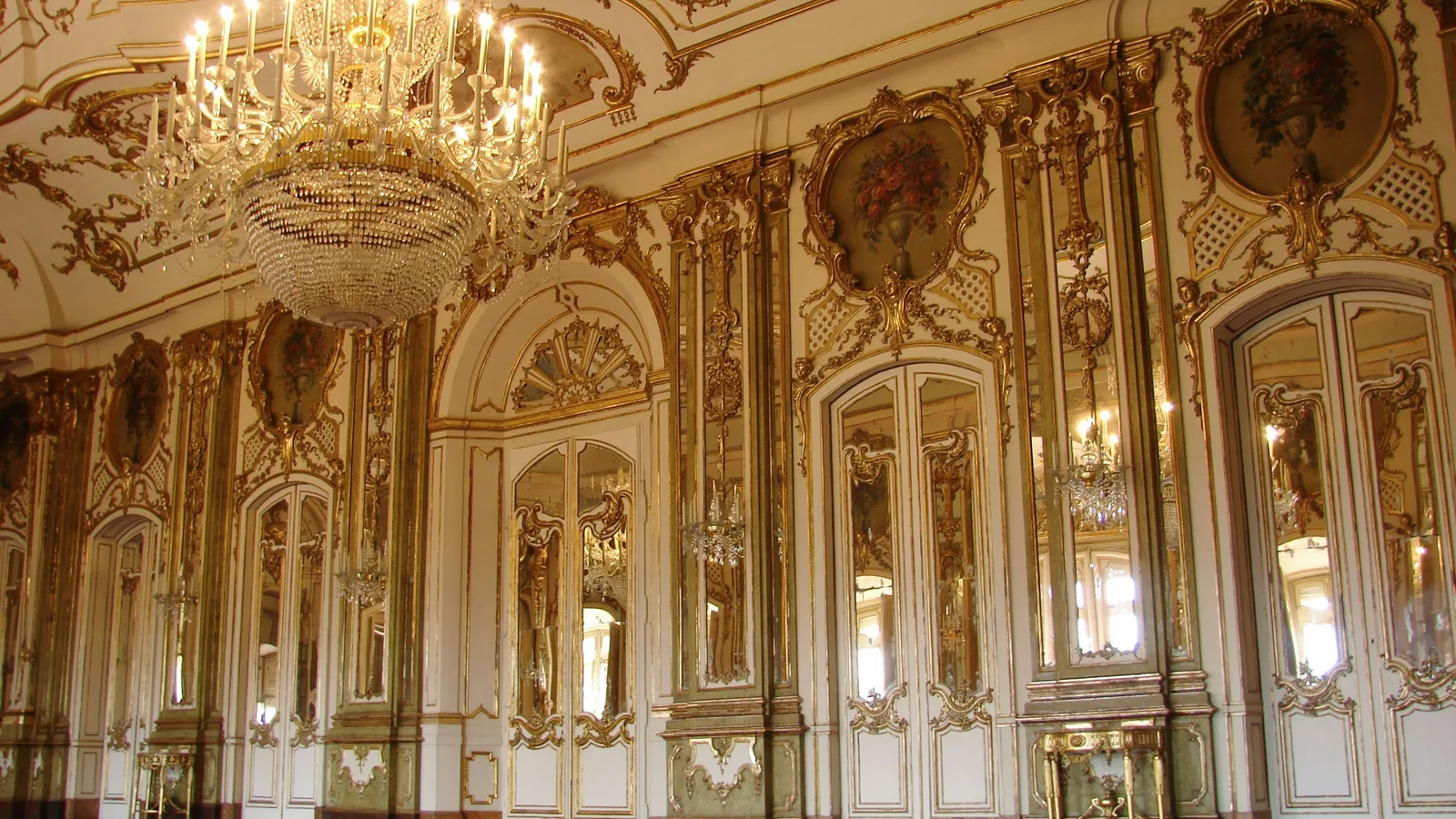
Cuando las condiciones meteorológicas hacen inviable el Picadeiro al aire libre —lluvia intensa, vientos fuertes, frío ocasional invernal— las representaciones se trasladan al interior de la Sala dos Embaixadores, el Salón de los Embajadores del palacio, o según la programación a un picadero cubierto en los terrenos. El formato interior es más íntimo pero de menor aforo; las entradas para estas funciones son más difíciles de conseguir sin preaviso. Presenciar doma clásica con sementales lusitanos en un salón de recepciones embajatoriales Braganza constituye uno de los espectáculos más impactantes que ofrece palacio europeo alguno, y uno de los poquísimos casos en que el salón de Estado principal de un palacio patrimonial se emplea activamente para su propósito estético original. Para quienes planeen una visita invernal o de finales de otoño, merece la pena confirmar el recinto del día con Parques de Sintra la misma mañana del espectáculo.
Días de representación, horarios y funcionamiento de las entradas
Los miércoles durante todo el año son la jornada tradicional de representación, habitualmente a media mañana, en el Picadeiro Henrique Calado cuando el tiempo lo permite. En temporada estival se añaden funciones dominicales según programación, que transcurren aproximadamente de junio a septiembre en función del calendario anual. Las sesiones de entrenamiento matinales también tienen lugar en días laborables seleccionados a un precio de entrada muy inferior y ofrecen una experiencia distinta y más íntima: jinetes trabajando caballos en ejercicios técnicos sin el formato de audiencia completa propio de una representación. Confirme el programa de la semana en curso directamente con Parques de Sintra en el momento de la reserva, ya que los calendarios varían ligeramente cada año.
Las entradas para la representación ecuestre y el acceso al palacio se comercializan por separado por Parques de Sintra. Nuestra fórmula estándar de servicio de conserjería para Queluz cubre la entrada al palacio más los jardines formales: no incluye el espectáculo ecuestre, porque el operador gestiona la asignación de funciones directamente y el calendario varía semanalmente. Si desea que nuestro equipo de conserjería coordine ambos aspectos en su nombre según sus fechas de viaje, responda al correo de confirmación en el momento de la reserva y le cotizaremos la combinación. La entrada a la representación es no reembolsable una vez emitida, conforme a la política estándar de Parques de Sintra para todo el conjunto.
Conciertos Barrocos en el Interior del Palacio
Más allá del programa ecuestre, Parques de Sintra programa conciertos barrocos en el interior del propio palacio en fechas seleccionadas cada año. Los espacios habituales son la Sala de Música —que alberga instrumentos originales del siglo XVIII, incluidos claves, fortepianos y violas da gamba— y el Salón de Embajadores, ambos concebidos para el tipo de música de cámara cortesana que la casa de Bragança patrocinó desde la década de 1750. Los programas suelen incluir compositores barrocos ibéricos (Carlos Seixas, Domenico Scarlatti, Antonio Soler), música rococó francesa contemporánea a la construcción del palacio y, en ocasiones, colaboraciones con la Escuela Portuguesa de Arte Ecuestre que combinan música en directo con demostraciones ecuestres.
La frecuencia de los conciertos varía cada año y no sigue un calendario semanal fijo; consulte el programa cultural de Parques de Sintra para conocer las fechas actuales si le atrae la idea de un concierto barroco en un palacio rococó del siglo XVIII aún en funcionamiento. El aforo es reducido —habitualmente un centenar de asientos en la Sala de Música— y las entradas se agotan con antelación. La combinación de instrumentos de época, repertorio de época y la sala original para la que fueron concebidos es el tipo de experiencia que justifica una visita de regreso a Queluz más allá del circuito habitual de palacios de excursión. Los visitantes procedentes de Viena o Salzburgo con conocimientos de música barroca suelen considerar el programa de conciertos de Queluz uno de los atractivos menos conocidos pero más destacados de la región de Lisboa-Sintra.
Itinerario Completo para un Día con Espectáculo
Si desea palacio, espectáculo y jardines en el mismo día, el recorrido habitual consiste en llegar a la apertura —normalmente a las nueve— y visitar el interior del palacio durante los primeros noventa minutos mientras las salas están tranquilas. Pausa para el espectáculo ecuestre de media mañana en el Picadeiro Henrique Calado, reservando quince minutos para acomodarse antes del espectáculo y aproximadamente una hora para la representación en sí. Tras el espectáculo, almuerzo en la cafetería del palacio o en la localidad de Queluz, y después regreso para pasear por los jardines formales durante la primera hora de la tarde. El tiempo total in situ es de unas cuatro horas en lugar de las dos horas de la visita básica solo al palacio.
Si hace calor —habitual en julio y agosto— invierta el orden: jardines a primera hora aprovechando la mañana más fresca, después interior del palacio a media mañana cuando las salas están más cálidas que el exterior, y el espectáculo tras el almuerzo si está programado. Los visitantes que salen de Queluz a última hora de la tarde, sobre las cuatro y media, pueden tomar un tren de la línea CP Sintra de conexión y llegar a Lisboa para la cena. Si combina Queluz con Sintra el mismo día, un día con espectáculo en Queluz suele ser demasiado completo para incluir también Pena —elija uno u otro para la tarde—. El espectáculo es la experiencia singular de Queluz que justifica tratar la visita como un destino en sí mismo y no como una parada intermedia.
Preguntas frecuentes
¿Cuándo actúa la Escuela Portuguesa de Arte Ecuestre?
Los miércoles durante todo el año son el día habitual de representación, normalmente a media mañana. Las funciones dominicales de temporada estival se añaden aproximadamente desde junio hasta septiembre. Las sesiones de entrenamiento matutinas se celebran determinados días laborables con un precio de entrada reducido. Confirme el programa de la semana actual con Parques de Sintra.
¿El espectáculo ecuestre está incluido en mi entrada al palacio?
No. La entrada al palacio y la entrada al espectáculo ecuestre se venden por separado a través de Parques de Sintra. Nuestro servicio de conserjería estándar para Queluz no incluye el espectáculo en el paquete; consúltenos en el momento de la reserva y coordinaremos ambos según sus fechas si lo desea.
¿Cuánto dura una representación?
Aproximadamente una hora para una representación completa. Las sesiones de entrenamiento matinales son más breves y menos coreografiadas formalmente, pero ofrecen la oportunidad de observar de cerca la equitación de trabajo. Prevea quince minutos adicionales antes y después para el acceso a los asientos y la salida.
¿Qué ocurre si llueve el día de la representación?
Las representaciones se trasladan al interior, a la Sala dos Embaixadores (Salón de los Embajadores) o a un picadero cubierto en los jardines, según el programa. El aforo interior es inferior al del Picadeiro al aire libre; le recomendamos confirmar el emplazamiento con Parques de Sintra la mañana del espectáculo.
¿Son realmente los caballos de linaje del siglo XVIII?
La raza lusitana utilizada por la escuela desciende directamente de los caballos de guerra y cortesanos ibéricos del mismo periodo en que se construyó el palacio. Los caballos se crían en la yeguada real Alter Real, en Alentejo, fundada en 1748 bajo el reinado de João V, prácticamente contemporánea del propio palacio.
¿Se celebran conciertos barrocos con regularidad?
Se programan según calendario específico, no con periodicidad semanal fija. Parques de Sintra organiza conciertos barrocos en fechas seleccionadas a lo largo del año, habitualmente en la Sala de Música o en el Salón de los Embajadores. Consulte el programa cultural vigente del operador para conocer las próximas fechas.
¿Puedo visitar las cuadras y conocer a los caballos?
Las visitas a las cuadras y los recorridos entre bastidores se programan en fechas seleccionadas y se comercializan como experiencias independientes de la entrada a la representación. Si desea una experiencia más cercana con los caballos, consulte la página de la escuela ecuestre de Parques de Sintra para conocer la disponibilidad actual.
¿El espectáculo es apto para niños?
Sí, el espectáculo ecuestre es una de las atracciones familiares más destacadas de cualquier monumento histórico en la región de Lisboa. Los niños más pequeños suelen disfrutar especialmente del vestuario, la música y la destreza ecuestre, más fácilmente que de los interiores palaciegos. Normalmente existen tarifas reducidas para niños; consulte los precios vigentes en el sitio web del operador.
¿Debo reservar con antelación?
Sí, especialmente para las funciones de temporada alta estival y los fines de semana: el aforo del Picadeiro es moderado y las mejores localidades se agotan con rapidez. Las funciones de invierno en el Salón de Embajadores tienen menor capacidad y se completan antes. Para visitas entre semana en temporada baja, reservar con unos días de antelación suele ser suficiente.
¿Puedo combinar el espectáculo con Sintra el mismo día?
Es complicado. Una visita a Queluz en día de función suele ocupar cuatro horas, lo que deja poco margen para disfrutar de Sintra con calma por la tarde. La mayoría de los visitantes que priorizan el espectáculo ecuestre optan por dedicar el día completo a Queluz y visitar Sintra en otra jornada.